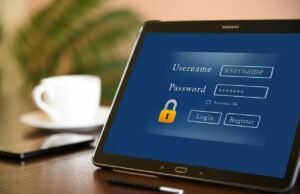
Securing your online accounts is more critical than ever in today’s digital landscape, where cyber threats are becoming increasingly sophisticated. A strong password is a good start, but it’s often not enough. That’s where two-factor authentication (2FA) comes in, offering an extra layer of security to protect your sensitive information from unauthorized access. This comprehensive guide will delve into what 2FA is, how it works, its benefits, the different types available, and how to implement it effectively to safeguard your digital life.
Understanding Two-Factor Authentication (2FA)
What is Two-Factor Authentication?
Two-factor authentication (2FA) is a security process that requires two different authentication factors to verify a user’s identity when logging into an account. It goes beyond just requiring a password by adding an additional verification step. This multi-layered approach makes it significantly harder for attackers to gain unauthorized access, even if they manage to compromise your password.
Why is 2FA Important?
2FA is a crucial security measure because:
- Protects Against Phishing: Even if you fall for a phishing scam and inadvertently give away your password, the attacker will still need the second factor, which they are unlikely to have.
- Mitigates Password Breaches: If a website you use experiences a data breach and your password is leaked, 2FA prevents attackers from using that password to access your account on other sites that have 2FA enabled.
- Reduces the Risk of Account Takeover: Account takeovers can lead to identity theft, financial loss, and reputational damage. 2FA dramatically reduces this risk.
- Compliance Requirements: Many industries and regulations require 2FA as part of their security protocols (e.g., HIPAA, PCI DSS).
According to Google, enabling 2FA can block up to 100% of automated bot attacks, 99% of bulk phishing attacks, and 66% of targeted attacks. These are significant numbers showcasing the effectiveness of this security measure.
How Two-Factor Authentication Works
The Two Factors: Something You Know and Something You Have
2FA relies on the principle of using at least two different types of authentication factors. These factors generally fall into one of these categories:
- Something You Know: This is typically your password, PIN, or security questions.
- Something You Have: This refers to a physical device or software application that you possess, such as a smartphone, a security key, or a one-time password (OTP) generator.
- Something You Are: This involves biometric authentication, such as fingerprints, facial recognition, or voice recognition. While technically possible, this factor is not commonly used as the second factor in 2FA due to complexity and cost.
The most common 2FA implementations utilize “something you know” (password) and “something you have” (smartphone). This is because smartphones are widely accessible and can receive codes via SMS or authentication apps.
The Authentication Process: A Step-by-Step Example
- You enter your username and password on a website or application.
- The system verifies your password.
- If the password is correct, the system prompts you for a second factor.
- You receive a one-time code via SMS, email, or an authentication app on your smartphone.
- You enter the code into the website or application.
- The system verifies the code.
- If the code is correct, you are granted access to your account.
Types of Two-Factor Authentication
SMS-Based 2FA
SMS-based 2FA sends a one-time code to your phone via text message. While widely used, it is generally considered the least secure 2FA method due to vulnerabilities to SIM swapping attacks.
- Pros: Easy to set up, widely supported, doesn’t require a smartphone (can use a basic feature phone).
- Cons: Vulnerable to SIM swapping, SMS interception, reliability issues in some areas.
Authentication Apps (TOTP)
Authentication apps, such as Google Authenticator, Authy, or Microsoft Authenticator, generate time-based one-time passwords (TOTP) on your smartphone. These are generally considered more secure than SMS-based 2FA because they don’t rely on cellular networks.
- Pros: More secure than SMS-based 2FA, works offline (after initial setup), readily available.
- Cons: Requires a smartphone, potential for device loss or damage.
Hardware Security Keys (U2F/FIDO2)
Hardware security keys, such as YubiKey or Google Titan Security Key, are physical devices that plug into your computer’s USB port or connect via NFC. They offer the strongest level of security against phishing and account takeovers because they cryptographically verify the login request.
- Pros: Most secure form of 2FA, resistant to phishing, durable.
- Cons: Requires purchasing a physical device, potential for loss or damage, less convenient than other methods for mobile devices (NFC is often supported).
Email-Based 2FA
Similar to SMS, Email-based 2FA sends a one-time code to your email address. This should be used only if no other methods are available, since email itself may be compromised.
- Pros: Can be used as a backup if other methods are not available.
- Cons: Least secure method, emails are easier to intercept and often stored in plain text. Email account compromised renders this useless.
Implementing Two-Factor Authentication
Enabling 2FA on Your Accounts
The process for enabling 2FA varies depending on the website or application. However, the general steps are similar:
- Go to the security or privacy settings of your account.
- Look for an option related to “Two-Factor Authentication,” “2FA,” or “Multi-Factor Authentication.”
- Choose your preferred 2FA method (e.g., SMS, authentication app, security key).
- Follow the on-screen instructions to set up the chosen method. This typically involves scanning a QR code with an authentication app or registering a security key.
- Store your recovery codes in a safe place. These codes are essential if you lose access to your primary 2FA method.
Best Practices for Using 2FA
- Enable 2FA on all accounts that support it, especially those containing sensitive information. Prioritize your email, banking, social media, and cloud storage accounts.
- Use authentication apps or hardware security keys whenever possible. These methods are more secure than SMS-based 2FA.
- Store your recovery codes in a safe and accessible location. Consider printing them out and storing them in a physical safe or using a secure password manager.
- Be wary of suspicious requests for 2FA codes. If you didn’t initiate the login request, someone may be trying to access your account.
- Regularly review your security settings and update your 2FA methods as needed. If you get a new phone, update your 2FA settings accordingly.
Choosing the Right 2FA Method for Your Needs
The best 2FA method depends on your individual security needs and technical capabilities. Consider these factors when making your choice:
- Security Level: Hardware security keys offer the highest level of security, followed by authentication apps, and then SMS-based 2FA.
- Convenience: SMS-based 2FA is often the most convenient, but also the least secure. Authentication apps offer a good balance of security and convenience.
- Accessibility: Consider whether you have a smartphone and are comfortable using authentication apps. If not, SMS-based 2FA may be the better option.
- Cost: Authentication apps are free, while hardware security keys require a one-time purchase.
- Risk Tolerance: Determine your individual risk tolerance. If you’re dealing with highly sensitive information, a higher security option like a hardware security key is preferable.
Conclusion
Two-factor authentication is a vital security tool that significantly strengthens your online security posture. By requiring a second factor beyond just your password, 2FA makes it much harder for attackers to gain unauthorized access to your accounts. While different 2FA methods offer varying levels of security and convenience, implementing any form of 2FA is a vast improvement over relying solely on passwords. Prioritize enabling 2FA on your most important accounts, and consider using authentication apps or hardware security keys for maximum protection. Don’t wait until you become a victim of an account takeover – take proactive steps today to secure your digital life with two-factor authentication.