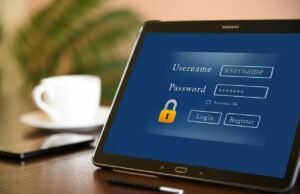
Imagine your online accounts as fortresses, guarded by a single password – your key. While a strong password is a good start, it’s like having just one lock on the main gate. What if that key falls into the wrong hands? That’s where two-factor authentication (2FA) comes in, adding an extra layer of security to protect your digital life. Think of it as a second lock, requiring something else besides your password to grant access. In this blog post, we’ll explore what 2FA is, why it’s crucial, and how you can implement it to safeguard your accounts.
Understanding Two-Factor Authentication (2FA)
2FA, also known as multi-factor authentication (MFA), is a security process that requires users to provide two different authentication factors to verify their identity. It significantly reduces the risk of unauthorized access to your accounts, even if your password is compromised.
What are Authentication Factors?
Authentication factors are categorized into three main types:
- Something you know: This is your password, PIN, or security questions.
- Something you have: This could be a physical device like a security key, a smartphone, or a one-time passcode (OTP) sent to your email or phone.
- Something you are: This involves biometric authentication, such as a fingerprint scan, facial recognition, or voice recognition.
2FA typically combines a “something you know” factor (your password) with a “something you have” factor (like a code from your phone).
Why is 2FA Important?
In today’s digital landscape, data breaches and phishing attacks are increasingly common. Passwords alone are no longer sufficient to protect your sensitive information. Consider these statistics:
- According to Verizon’s 2023 Data Breach Investigations Report, credentials were used in 49% of breaches.
- Google estimates that enabling 2FA can block 100% of automated bot attacks.
2FA provides a robust defense against these threats by requiring attackers to bypass two independent authentication methods, making it much harder to gain unauthorized access. It’s a crucial step in enhancing your online security posture.
How Does 2FA Work?
The 2FA process is generally straightforward:
Examples of 2FA in Action
- Google: When logging into your Google account, you might be asked to enter a code sent to your phone via SMS or generated by the Google Authenticator app.
- Banking: Many banks require you to enter a one-time passcode (OTP) sent to your registered mobile number when making online transactions or accessing your account from a new device.
- Social Media: Platforms like Facebook and Twitter offer 2FA using authenticator apps or SMS codes to protect your account from unauthorized access.
- Password Managers: Even password managers, which store all your passwords securely, benefit greatly from 2FA. Adding that second layer makes accessing all your passwords safe.
Types of Two-Factor Authentication Methods
Several 2FA methods are available, each with its own advantages and disadvantages:
SMS-Based 2FA
- Description: A one-time passcode (OTP) is sent to your mobile phone via SMS.
- Pros: Easy to use, widely available, doesn’t require a smartphone with an app.
- Cons: Less secure than other methods, vulnerable to SIM swapping attacks and interception.
Authenticator Apps
- Description: Apps like Google Authenticator, Microsoft Authenticator, or Authy generate time-based one-time passwords (TOTP).
- Pros: More secure than SMS-based 2FA, works offline once set up, convenient to use.
- Cons: Requires a smartphone, needs to be set up correctly, recovery can be tricky if you lose access to your device.
Hardware Security Keys
- Description: Physical devices like YubiKey or Google Titan Security Key that plug into your computer or mobile device.
- Pros: Most secure method of 2FA, resistant to phishing attacks, very reliable.
- Cons: Requires purchasing a physical device, can be lost or damaged.
Biometric Authentication
- Description: Uses your fingerprint, facial recognition, or voice recognition to verify your identity.
- Pros: Convenient, highly secure, becoming increasingly common on smartphones and laptops.
- Cons: Can be bypassed in certain situations, privacy concerns related to biometric data.
Implementing 2FA: Best Practices
Enabling 2FA is a simple yet effective way to protect your online accounts. Here are some best practices to follow:
Prioritize Accounts
- Start by enabling 2FA on your most critical accounts, such as your email, banking, social media, and password manager.
- Check if the websites and apps you use support 2FA. Most major platforms offer this security feature.
Choose the Right Method
- Consider the security level and convenience of each 2FA method. Authenticator apps and hardware security keys are generally more secure than SMS-based 2FA.
- Opt for the method that best suits your needs and technical abilities.
Keep Backup Codes Safe
- When setting up 2FA, you’ll typically receive backup codes or recovery options. Store these codes in a safe and accessible place, such as a password manager or a secure document.
- These codes will be essential if you lose access to your primary 2FA device.
Regularly Review and Update
- Periodically review your 2FA settings and update your recovery options as needed.
- If you get a new phone, remember to transfer your authenticator app or update your registered mobile number.
Practical Steps to Enable 2FA:
Here’s a generic guide applicable to most platforms:
Conclusion
Two-factor authentication is no longer an optional security measure, but a necessity in today’s digital world. By adding that extra layer of protection, you significantly reduce the risk of unauthorized access to your accounts and safeguard your sensitive information. Evaluate your online accounts, choose the 2FA methods that best suit your needs, and implement them diligently. Take control of your online security and make 2FA a standard practice for all your critical accounts. The small effort to enable 2FA can save you from the significant headaches and consequences of a compromised account.